
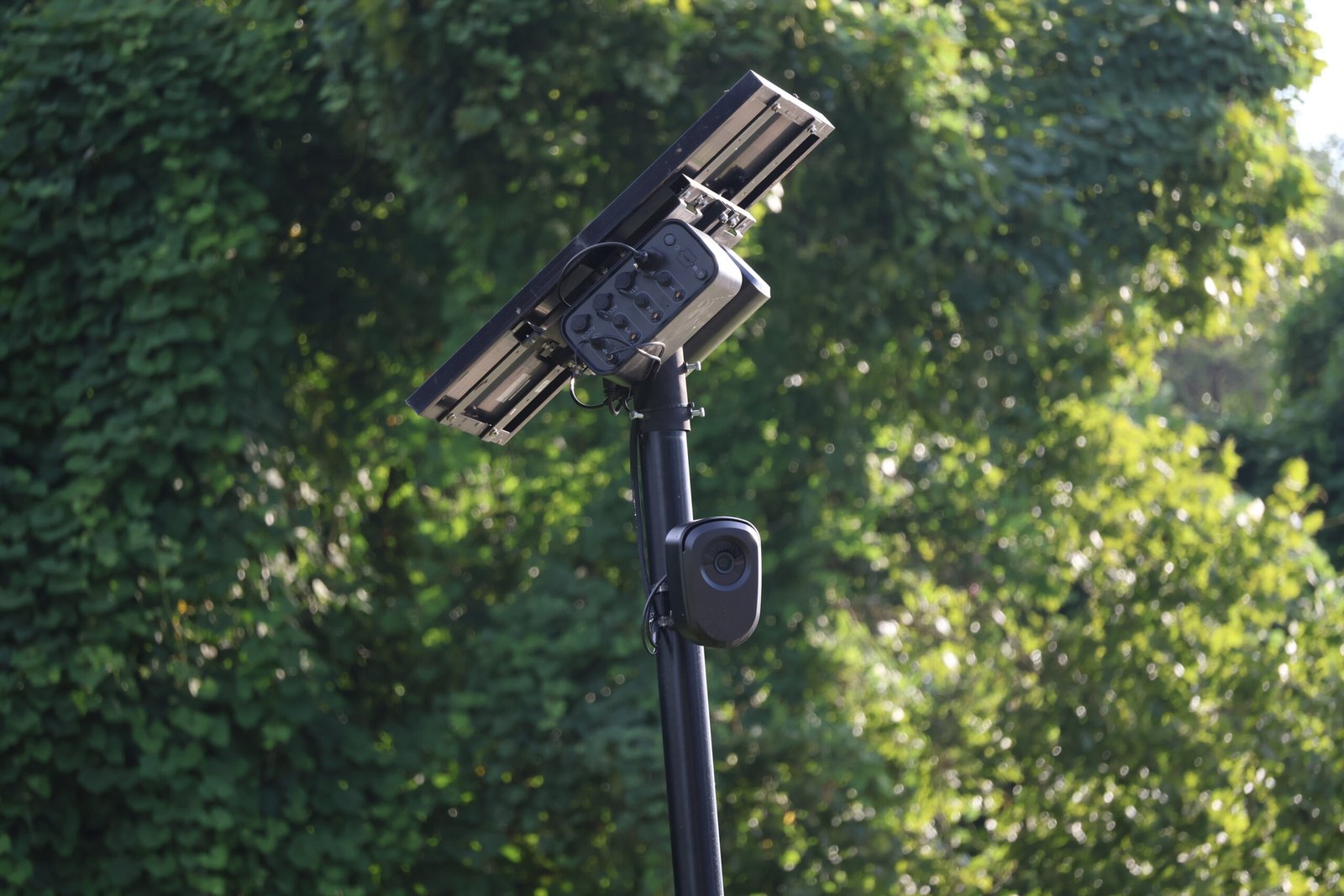
Roadside Flock ALPR Camera (Brighter Tomorrow Media, File Photo)
Flock Safety has recently come under fire for their ALPR (Automatic License Plate Reader) camera placements. An August 8, 2026 snapshot of Deflock, an independent crowdsourced map, verified 103,039 Flock Safety cameras deployed across the United States. These cameras are placed in parking lots, on street corners, in private citizens’ yards [1], and along highways.
One such placement in Nashville, TN drew the attention of Steve Eimers, otherwise known as “Guardrail Guy.” For 17 years, Eimers has dedicated his life to improving roadside safety. Eimers’ efforts have not solely been for his online audience, but he has successfully campaigned for Congressman Tim Burchett to include much of Eimers’ language from his proposed “Guardrail Manufacturers’ Transparency Act” in the Surface Transportation Reauthorization Bill [2].
Detailing the inadequate and potentially hazardous safety features of Flock cameras, on July 14, 2026, Eimers posted a video to his Youtube channel. Eimers shows the camera mounting poles are within the expected clear zone for vehicles hitting the end of the guardrail, the mounting poles are encroaching on the designated crash space for a vehicle running into the guardrail, and that “nobody has been worried about the crash-safety elements of these poles.[3]” referring not only to Flock’s verified 103,039 US cameras, but also to the various other ALPR camera companies rolling out across the United States.
Eimers also points out the risk presented by concrete-anchored aluminum mounting poles. Guardrails are designed to protect drivers who have left the roadway [4], ensuring motorists are not injured by roadside debris or terrain. Roadside barriers are built to intentionally bend so that drivers do not experience a sudden stop, which can cause severe injury. Eimers compares the concrete-anchored aluminum mounting pole to the nearby cable-strung chain-link fence. Whereas the fence is designed to break away, the aluminum pole is not. Eimers conveys that the unsafe camera mounting pole could cause severe brain damage.
When the Tennessee Department of Transportation was asked if permits are required for Flock camera installations inside rights-of-way, they replied that they would return with that information at a later date. When asked whether the department has identified any improperly permitted installations and what crashworthiness standards those poles are required to meet, the TN-DOT again replied that they would return with that information at a later date [5]. With the increase in ALPR cameras across the United States from many companies (Axon, Motorola, Redflex, Genetec, and Flock) it seems like questioning the crashworthiness of these 100,000 cameras was not considered before their nationwide installation. Breakaway poles being a reactionary measure seems to imply these companies left safety by the roadside.



Leave a Reply